According to the Insurance Information Institute analysis, about 1 in 35 insured homes has a property damage claim related to wind or hail each year.
If you are buying a home, your lender has probably mentioned hazard insurance as a requirement. But what exactly is hazard insurance, and why does everyone seem confused about whether they need it separately from homeowners insurance?
What Is Hazard Insurance for Home?
Hazard insurance is the part of your homeowners insurance policy that protects the physical structure of your home from specific disasters.
When mortgage lenders talk about requiring hazard insurance, they are referring to this structural protection component that is already included in any standard homeowners insurance policy.
The term became popular because lenders need to protect their investment in your property.
If a fire destroys your home and you don’t have insurance, you might walk away from the mortgage, and the lender would be stuck with a burned-down property worth far less than the loan amount.
That is the reason why they require proof of hazard coverage before approving your mortgage.
Your hazard insurance covers damage from fire, lightning, windstorms, hail, explosions, vandalism, theft (damage to the structure during a break-in), falling objects, weight of ice and snow, and damage from vehicles or aircraft.
Read this article to learn more about what home insurance covers.
How Hazard Insurance Protects Your Investment
The hazard insurance becomes financial support when a disaster takes place. For example, if a tree falls onto your roof and damages your house structure, or if water gets inside the house during a flood, without insurance, you will have to face thousands of dollars in repairs.
With the hazard insurance, you file a claim with your insurance company, and after you pay
With hazard insurance, you file a claim with your insurance company. After you pay your share of the repair costs (usually $500 to $2,000), your insurer covers the rest up to your policy limits.
It includes fixing the roof, replacing drywalls that are damaged, getting electrical systems repaired, and restoring your house as it was new.
The coverage amount matters because your mortgage lender will require enough hazard insurance to cover the full replacement cost of your home, and this is not the same as your home’s market value or what you paid for it.
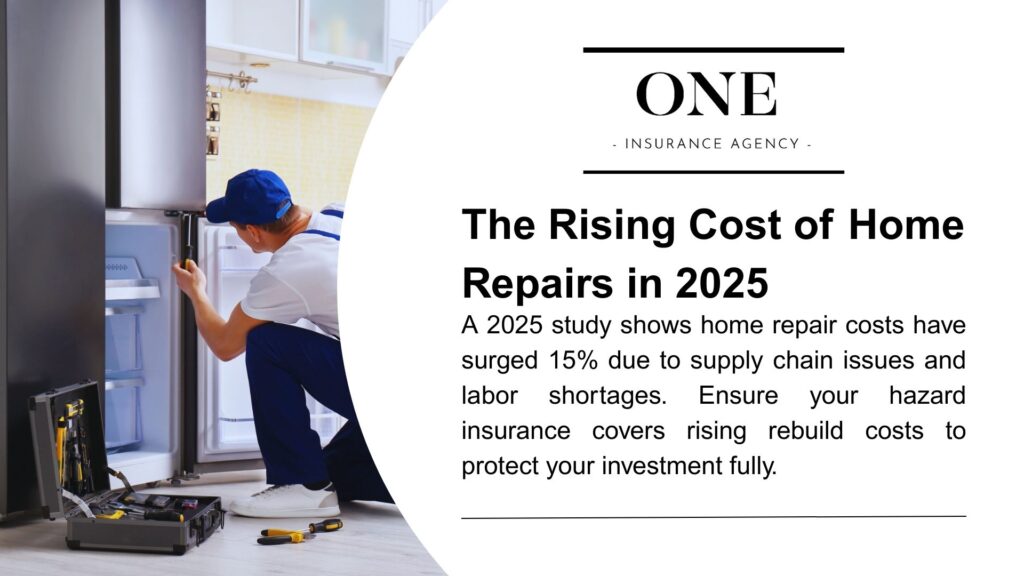
Replacement cost means how much it would cost to rebuild your home from scratch at today’s construction prices. In many areas, this number has risen due to increased labor and material costs.
IMPORTANT! Hazard Insurance Does Not Cover Everything!
Natural disasters, which are flood damage and earthquake damage, need separate insurance and are not covered in hazard insurance, and neither is the damage from poor maintenance, pest infestation, or mold that develops over time.
The Real Cost of Home Protection
Looking at home insurance costs reveals why understanding your coverage matters so much.
In recent studies made in July of 2025, it is shown that an American citizen now pays $2,466 per year for house insurance. And these costs vary by the state you are living in.
Read this article to learn how much is the average monthly/yearly home insurance across the USA.
The 3 most important factors that affect these prices of house insurance across the USA are:
- Natural disasters
- Crime rates
- Construction costs
Determining Your Coverage Needs
In order for you to figure out how much home insurance you need, is by first need to calculate your house replacement cost, and this is not meant by the market value, because your land doesn’t have to be rebuilt after a fire, so it is not part of the replacement cost.
Start by finding out local construction costs per square foot. Multiply that by your home’s total square footage. Add 10% to account for inflation and unexpected costs. For a 2,000-square-foot home in an area where construction costs $150 per square foot, you’d need at least $330,000 in dwelling coverage.
Personal property coverage typically equals 50% to 70% of your dwelling coverage. But do a home inventory to be sure. Walk through each room, recording your possessions.
Liability coverage protects you from lawsuits. Start with a minimum coverage of $300,000. If you have significant assets, consider $500,000 or more.
You might also want an umbrella policy for extra protection. Loss of use coverage pays for temporary housing if your home becomes unlivable. Calculate your monthly housing costs and multiply by 12 to ensure adequate coverage.

One Insurance Agency Is An Industry Leading Business For House insurance
When it comes to protecting your home, ONE Insurance Agency stands out as Minnesota’s leading independent broker.
They have helped families save thousands of dollars on bundled policies and protected small businesses with proper liability coverage.
Get your free consultation today and find coverage that actually fits your life and your budget.
Frequently Asked Questions From Homeowners
- What is hazard insurance for a home?
Hazard insurance is a part of homeowners insurance that covers any damage that is related to the house structure from fires, winds, or hail.
- Do I need hazard insurance if my home is paid off?
Actually, there is no need for hazard insurance when your house mortgage is paid off, but it is better to keep it because without it you will have to pay money when disasters hit.
- What does hazard insurance not cover?
It won’t cover floods, earthquakes, wear and tear, or damage from pests. For floods and quakes, you’ll need separate policies.
- How much hazard insurance do I need?
You’ll need enough to fully rebuild your home—basically, the full replacement cost based on today’s construction prices.

For More:
